Ecommerce Development

Custom Ecommerce Development That Fits How You Sell

Holtz Digital develops custom commerce systems, API integrations and ordering workflows for businesses with requirements beyond a standard store launch. Based in Buffalo, we work remotely with businesses across the United States on wholesale/B2B requirements and platform migrations.

Platform selectionConnected workflowsLaunch testing

What We Build

Ecommerce development services

Our development work focuses on connecting commerce systems, handling custom ordering rules and moving stores between platforms. We review supported platform features before recommending custom code. Your proposal defines the catalog, workflows and connections included.

Storefront, catalog and checkout

Product pages, variants, cart and payment flow built around your catalog. We define shipping, tax settings and order notifications with you before implementation.

Ecommerce integration services

Connect supported inventory, fulfillment, accounting or customer systems. Discovery establishes API access, data ownership and error handling before we promise a connection.

Custom ordering and wholesale/B2B workflows

Scope requirements such as wholesale pricing, restricted catalogs or a custom admin workflow. We assess platform settings and extensions before adding custom code.

Our Own Ecommerce Brand

From product variants to fulfillment

Far Country Wear is our self-owned apparel brand. We built its custom storefront with Next.js, Stripe checkout, a Convex backend and Printful fulfillment. Customers choose size and color variants before ordering; the connected systems support product, payment and fulfillment workflows.

The project shows the systems we connected and the shopping experience we built for a brand we operate ourselves.

Explore Far Country Wear
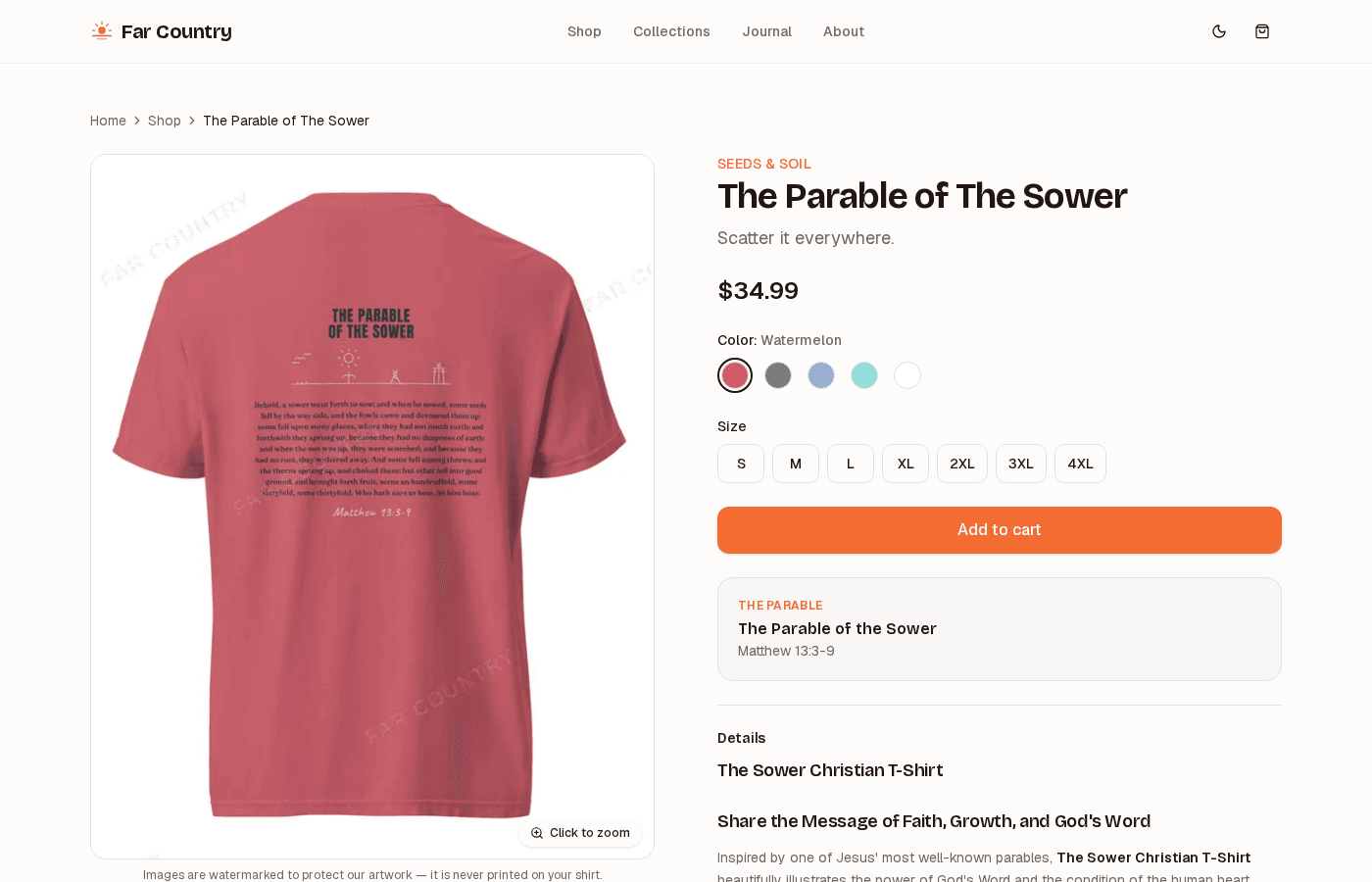
Far Country Wear product page with shirt size and color choices beside the add-to-cart button
Product detail page from our self-owned apparel store.

Platform Options

Choose a platform around your technical requirements

Choose around your ordering requirements and the cost of running the store after launch. A custom build makes sense when its added control solves a specific business need.

Launching a Shopify or WooCommerce store for a local product business? See our ecommerce website design for Buffalo and WNY retailers for store launch, local pickup and delivery, product SEO and Google Shopping setup for eligible products.

Shopify

Good fit: A hosted store with a conventional product catalog and checkout.

Development approach: Configure the storefront and supported apps; assess custom integration requirements against the platform's APIs and checkout options.

Ongoing responsibilities: Budget for the subscription, payment processing and any paid apps. Hosting is managed, but catalog, app and integration changes still need an owner.

WooCommerce

Good fit: Commerce within WordPress, especially when content and the store share a site.

Development approach: Choose hosting, a theme and the extensions needed for your products and fulfillment. Keep the plugin set tied to actual requirements.

Ongoing responsibilities: Plan for hosting, backups, WordPress and plugin updates, license renewals and compatibility testing.

Custom ecommerce

Good fit: Ordering rules or connected systems that justify a purpose-built application.

Development approach: Design the storefront, data model and integrations around agreed workflows, using a supported payment provider for checkout.

Ongoing responsibilities: Budget for application hosting, monitoring, security updates and developer support. More control also means more software to maintain.

Connected Systems

Ecommerce integrations start with the data

An inventory or fulfillment connection needs more than an API key. Before quoting an integration, we review the tools you use, their access requirements and a sample of the records that need to move between them.

Decide which system owns each record

Identify the source of truth for products, inventory, prices and orders. Define which system may update each field so two systems do not overwrite each other.

Match products and variants

Map SKUs, product IDs and variant IDs. Review missing or duplicate identifiers before importing a catalog or synchronizing stock.

Agree how and when updates move

Define one-way or two-way updates, scheduled syncs or supported events, and the expected delay. Include cancellations, returns and fulfillment status where required.

Plan for failed and repeated updates

Specify retries, duplicate protection, error reporting and who resolves exceptions. Test those paths alongside a successful order before launch.

Bring the names of your inventory, point-of-sale, accounting and shipping tools to the first conversation. Available APIs, connector licenses and account permissions determine which connections are practical.

Migration & Launch

Plan the move. Test the whole order.

For an existing store, discovery includes a review of exports, current URLs and search traffic. We use that inventory to agree what moves, what changes and how the new store will be checked before it replaces the old one.

Migration and search safeguards

  • Map product, variant and category data; compare sample imports and record counts.
  • Map changed URLs to relevant destinations and test permanent redirects.
  • Review titles, canonical URLs, internal links, sitemaps and product structured data.
  • Agree the final data sync, launch window, rollback plan and post-launch Search Console checks.

Launch acceptance checks

  • Complete mobile and desktop checkout tests, including declined payments and agreed refund flows.
  • Confirm the order, customer notification and fulfillment handoff reach the intended systems.
  • Test agreed shipping options, tax settings, discounts and stock behavior with representative orders.
  • Review purchase tracking, administrator access and the product-management walkthrough with your team.

Cost, Timeline & Handoff

Scope the store before setting the budget

Focused Shopify or WooCommerce projects start around $2,000. Custom ecommerce development is quoted around the catalog, integrations, migration and ordering rules. Your proposal separates the build from recurring hosting, platform, app, processor and support costs.

A standard small-business store typically takes 8 to 12 weeks, depending on content readiness and approvals. Custom workflows and integrations can take longer. We agree milestones, acceptance checks and the responsibilities your team takes over at handoff.

Ongoing updates, monitoring and integration support can be scoped separately. The maintenance plan should reflect who manages your hosting, platform, plugins and connected services.

Maintenance Plans From $150/mo

Frequently Asked

Questions about ecommerce development

When do I need custom ecommerce development instead of Shopify?

Consider custom development when essential ordering, pricing or integration requirements do not fit a supported Shopify setup. A standard catalog and checkout may be better served by Shopify or WooCommerce. We compare the cost of configuring an existing platform with building and maintaining custom software before recommending a route.

How much does ecommerce website development cost?

Holtz Digital projects start around $2,000 for a focused Shopify or WooCommerce store. Custom ecommerce development is quoted by scope: catalog complexity, integrations, migration and ordering rules affect the work. Platform subscriptions, hosting, paid apps, payment processing and ongoing support are separate costs to review in your proposal.

How long does an ecommerce development project take?

Plan around 8 to 12 weeks for a standard small-business store, subject to product content, approvals and agreed requirements. Custom workflows, data cleanup and third-party integrations can extend that schedule. We define milestones and launch acceptance checks after reviewing your catalog and existing systems.

Can you integrate my store with inventory, shipping or accounting software?

We can scope ecommerce integrations after reviewing the software, API access and available connectors. We agree which system owns each record, how product and SKU identifiers match, how often data moves, and what happens when an update fails. A connection depends on the capabilities and access provided by your existing tools.

Can you migrate my existing ecommerce website?

Yes. We start with an export and URL review to establish which products, variants, customers and order records can move. The migration plan covers data mapping, redirects, metadata and checkout checks. Customer passwords and some historical records may require a separate approach. Search rankings can fluctuate during a migration; traffic preservation is a goal, not a guarantee.

Who handles payments, transaction fees and store security?

We configure a supported payment provider and test the agreed checkout flow. The provider and platform set processing fees, account requirements and payout terms. Your business owns those accounts and its compliance responsibilities. The proposal assigns responsibility for software updates, access controls, backups and ongoing payment or integration support.

Does ecommerce development include SEO?

We scope crawlable product and category pages, descriptive metadata, canonical URLs, sitemaps and product structured data that matches the store's visible information. Migration work includes a redirect plan where URLs change. Merchant Center feeds and ongoing SEO can be scoped separately. Search engines decide indexing and visibility; a build does not guarantee rankings or inclusion in AI answers.

Can my team manage the store after launch?

Yes. We agree which product, order and fulfillment tasks your team needs to manage, then include a walkthrough of those workflows in the handoff. The proposal defines access to business accounts, code or hosting where applicable, and support responsibilities. Ongoing maintenance and integration changes are available separately.

Related Services

Explore your next step

From the Blog

More Ecommerce Tips & Guides

Explore ecommerce platforms, store planning and development decisions.

Tell us what your store needs to do

Share your products, current platform and the tools you need to connect. We'll use those requirements to discuss the platform, scope and next steps.